Every job below is one we do ourselves across San Diego.
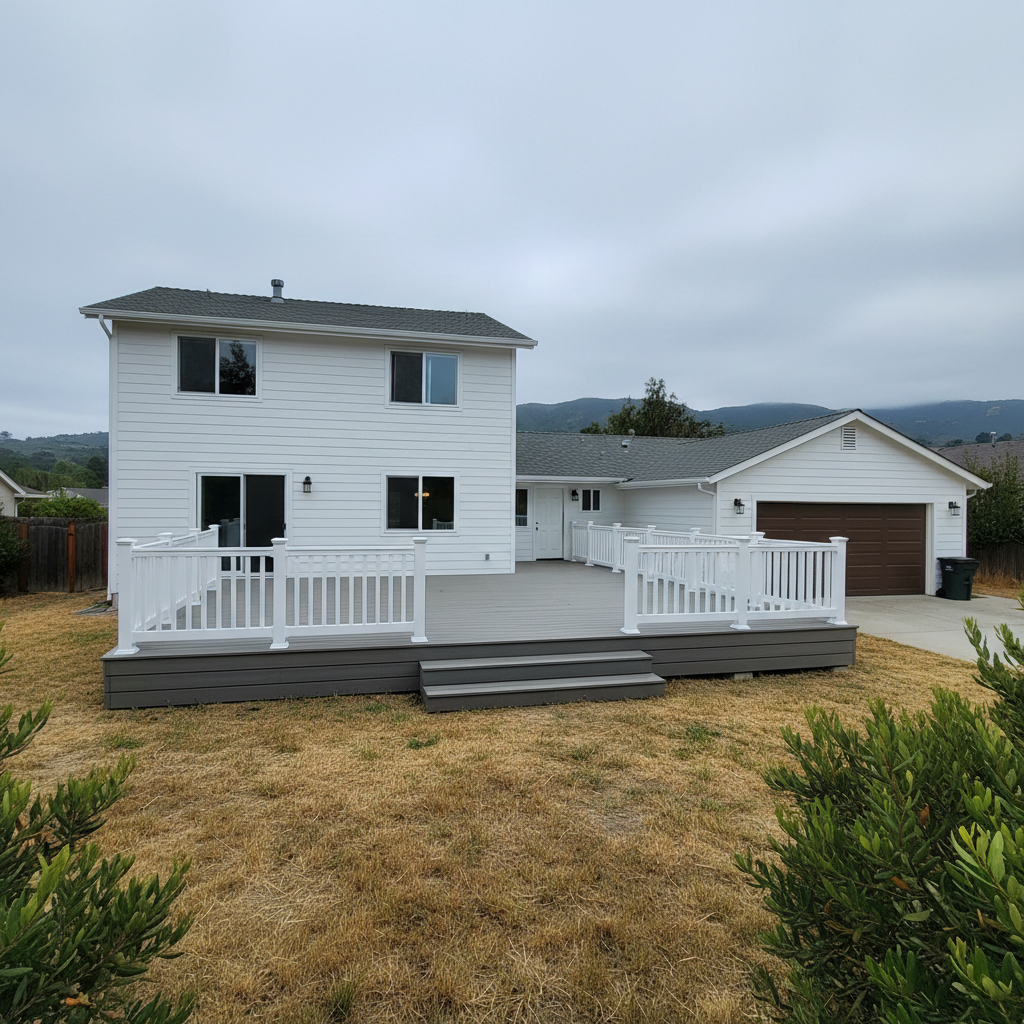
We frame and build new decks from the ground up, starting with footings sized for your soil and span. Framing goes down at 16 inches on center so the decking doesn't flex underfoot, and we use joist hangers and structural screws rather than nailing through the face of the board.
Soft spots, bouncy sections and loose railings usually mean the framing underneath has taken on water. We pull up the affected boards, check the joists for rot, and replace only what's actually failed instead of rebuilding the whole deck.
San Diego sun is hard on exposed wood, even without much rain the UV alone breaks down a finish in a couple of years. We pressure wash, let the wood dry fully, then apply a stain and sealant rated for high UV exposure.
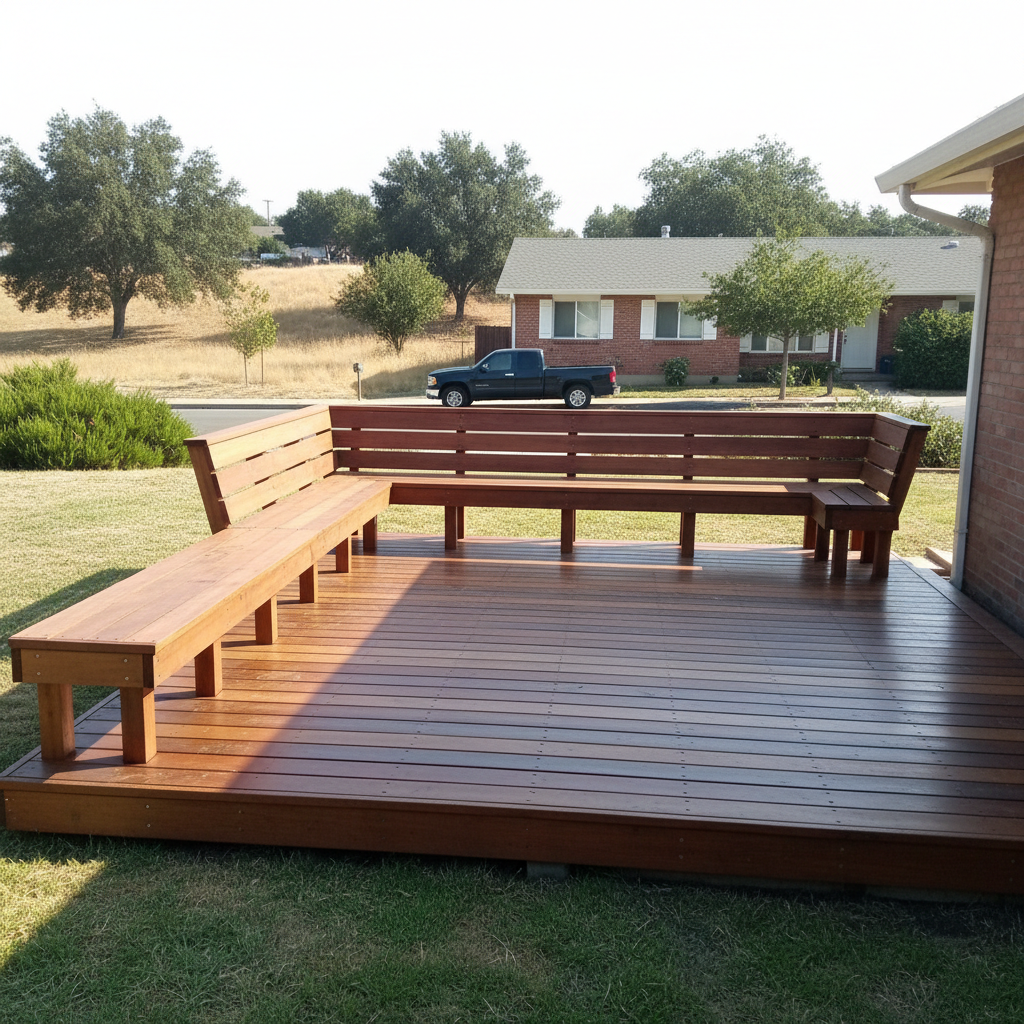
If you want multiple levels, built-in seating, a pergola over part of the deck or stairs that land somewhere other than straight off the house, we design it before we build it. You see a layout and a materials list up front, not a surprise halfway through framing.
Composite boards like Trex or TimberTech cost more upfront than pressure-treated pine but they don't splinter, warp, or require re-staining every few years. We still frame the structure in treated lumber, the composite is just the surface you walk on.
When the framing has rotted past the point of patching, or the footings were undersized to begin with, we tear the old deck out and start over. This is also when we catch ledger board flashing that was never installed right the first time, which is a common reason decks rot from the house side out.
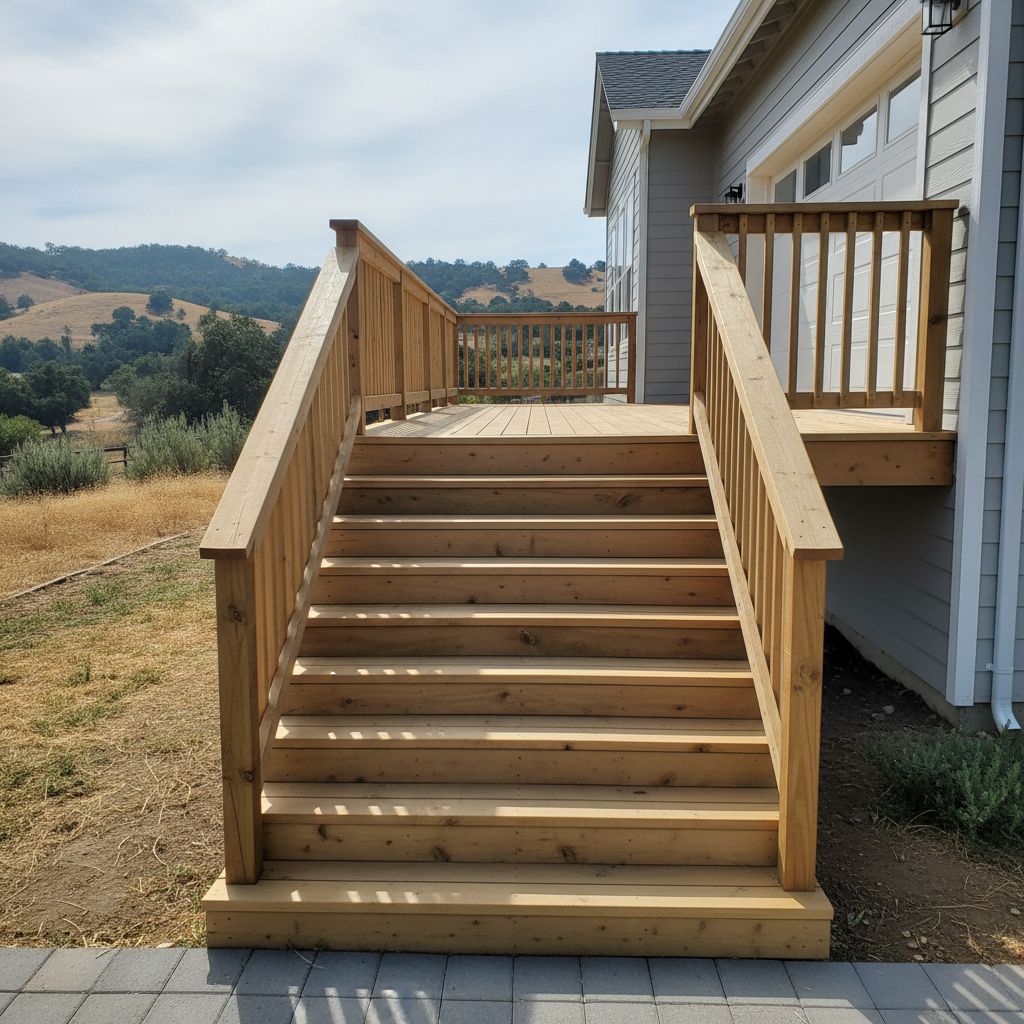
Railings have to be 36 to 42 inches high depending on the deck's height off grade, with balusters spaced no more than 4 inches apart, that's code in California. We build railings in wood, cable, or aluminum, and we size them to pass inspection the first time.
Stepped decks need their own footings and stair stringers at each level, not just one frame with a drop in the boards. We plan the stair runs and landings so the grade change feels natural instead of like an afterthought.
This is the part nobody sees once the boards go down, and it's the part that decides whether the deck is still solid in ten years. We check span tables for joist size and spacing, flash the ledger board where it meets the house, and use galvanized or stainless hardware depending on how close you are to the coast.
A lot of our deck clients want shade over part of the structure, so we also build patio covers and pergolas, either attached to the house or freestanding over the deck. We can size the posts into the same footing layout as the deck so it's one structure instead of two separate projects fighting each other.
Four steps, and no surprises in any of them.
You tell us what you want doing, we look at what is actually there, and we ask the awkward questions early.
In writing, itemised, free. If something might add cost later we flag it now rather than at the end.
Same crew throughout. We cover your floors, keep the dust down and tidy up before we leave each day.
You point out anything you are not happy with and we fix it before the invoice, not after.
Deck installation and repair covering San Diego and the surrounding towns.
Questions that come up once a deck project is underway.
Describe the problem and we will tell you what it probably is. No obligation.